 English
 Español



Building 1, Block 4, Wufeng Industrial Park, Daxi Town, Taizhou City, Zhejiang Province, China
Choosing an electric motor often starts with a simple question: what will the machine need it to do? A pump, a conveyor, and a production machine may all use three phase motors, but their operating requirements can be quite different. That is why understanding the difference between a three phase AC synchronous motor and an induction motor matters before placing an order.
The two motor types share some basic features, yet their rotors behave differently once power is applied. This affects how they start, how they respond to load changes, and what kind of control system they may need. For industrial buyers, these details can help narrow down suitable products without getting lost in technical specifications.
The Difference Is in How the Rotor Moves
A motor does not produce rotation simply because electricity reaches its terminals. The magnetic fields inside it must interact in a way that creates torque. Synchronous and induction motors achieve this through different rotor arrangements.
Why Does a Synchronous Motor Run at Synchronous Speed?
In a three phase AC synchronous motor, the stator creates a rotating magnetic field. The rotor has its own magnetic field, supplied by permanent magnets or an excitation system, depending on the design.
During normal synchronous operation, the rotor turns in step with the stator's rotating field. Its speed is determined by the supply frequency and the number of magnetic poles.
This characteristic can be useful when an application calls for a defined operating speed. However, the motor must remain within its operating limits. If the load becomes excessive, it may lose synchronism rather than continue operating normally.
Starting is another point worth checking. Some synchronous motors need a suitable drive or a dedicated starting arrangement. The requirements depend on the particular motor, so buyers should not assume that every model can be connected and started in the same way.
Why Does an Induction Motor Run Slightly Slower?
An induction motor produces torque through electromagnetic induction. The stator creates a rotating magnetic field, which induces current in the rotor. That current interacts with the magnetic field and makes the rotor turn.
During normal motoring operation, the rotor runs below synchronous speed. The difference between the two speeds is called slip.
Slip is part of the motor's normal operation. Without relative motion between the rotor and the rotating field, the usual induction process would not produce the rotor current needed for torque.
This becomes easier to understand when looking at a machine under load. A conveyor carrying heavier products needs more torque than one carrying a light load. The induction motor responds through changes in rotor current and slip.
This operating principle makes induction motors suitable for a wide range of factory duties. Squirrel cage models, in particular, are commonly found in pumps, fans, compressors, and material handling equipment.
What Do These Differences Mean for Motor Buyers?
The technical explanation is useful, but the practical question is how each design fits the machine.
| Point to Compare | Synchronous Motor | Induction Motor |
|---|---|---|
| Rotor Speed | Runs in step with the rotating magnetic field during synchronous operation. | Normally runs below synchronous speed under motoring conditions. |
| Torque Production | Uses the interaction between the rotor and stator magnetic fields. | Uses current induced in the rotor. |
| Starting Arrangement | Depends on the motor design and control method. | Many squirrel cage models can start directly from the supply when conditions permit. |
| Speed Adjustment | Requires a control arrangement suitable for the motor design. | Can be used with a compatible variable frequency drive. |
| Power Factor | Some designs allow power factor adjustment. | Varies with motor design and load. |
| Typical Applications | Selected drives requiring synchronous operation. | Pumps, fans, compressors, conveyors, and general factory machinery. |
There is no useful answer to the question of which type to choose without knowing the application. A motor intended for a process with specific speed requirements may need different characteristics from one driving a standard ventilation fan.
The purchase decision should come from the machine's needs, not from the assumption that one motor category will suit every industrial situation.
When Does Speed Become a Deciding Factor?
Speed requirements can be easy to overlook when a buyer is comparing motors by rated power. Yet the way a machine runs throughout the day can have a direct bearing on the motor selection.
A synchronous motor maintains its relationship with the rotating magnetic field while it remains synchronized. An induction motor, on the other hand, changes its slip as the mechanical load changes. For many industrial machines, this behavior is entirely acceptable.
The picture changes when the equipment needs to run at different speeds.
Take a conveyor in a packaging plant. It may need to slow down when one production stage falls behind and speed up when the line returns to its normal pace. A pump may also need to adjust its output as water demand changes.
In these situations, the control system deserves as much attention as the motor itself. A suitable variable frequency drive can adjust the speed of an induction motor. Synchronous motors can also be used in controlled drive systems, although the required equipment depends on their construction.
Before choosing a motor, consider how frequently the machine changes speed, whether it starts under load, and how much torque it needs during operation. These details can make a bigger difference than a general comparison of motor types.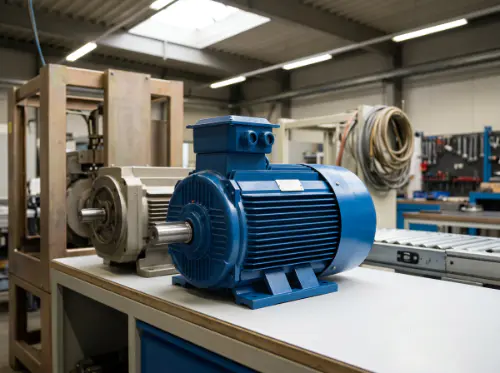
Where Are Synchronous and Induction Motors Used?
Synchronous Motors for Applications with Specific Speed Requirements
Synchronous motors are used in selected industrial drives where synchronous operation is important. Depending on their design, they may also suit applications that require particular power factor characteristics.
The category includes different technologies, however. Permanent magnet motors and electrically excited motors do not have identical starting methods or control requirements.
For a machine builder, this means checking the individual model rather than relying on the name alone. The required speed, torque, starting arrangement, and available drive equipment should all fit the application.
Induction Motors for Everyday Factory Equipment
Induction motors are commonly used in industrial pumping systems, ventilation equipment, air compressors, conveyors, and many types of production machinery.
Suppose a factory needs to replace the motor on an existing pump. The original motor may have served the equipment for years, so its nameplate provides a useful starting point. Even so, the replacement needs to match the installation and the pump's operating conditions.
The mounting arrangement, shaft dimensions, electrical supply, and load requirements all need to be checked. Choosing a motor with a matching power rating does not guarantee that it will fit or operate correctly.
For equipment manufacturers, these details are also important during product development. A motor that works well in one machine design may need a different mounting arrangement or control setup in another.
Will a Synchronous Motor Always Use Less Energy?
No. The motor type alone does not determine electricity consumption.
Efficiency depends on the actual design, the load, the control method, and the way the motor operates. Some synchronous motor designs offer useful efficiency or power factor characteristics, while a properly selected induction motor can also meet demanding industrial operating requirements.
Operating hours are worth considering when comparing products. A motor that runs through several shifts has a different cost profile from one used for occasional tasks. The load matters too. A motor that spends much of its time operating outside its intended range may not deliver the expected system performance.
Buyers comparing motors should check the published efficiency classification and the relevant technical documentation. They should also make sure the products are being assessed under comparable conditions.
The machine driven by the motor deserves attention as well. An inefficient pump or poorly adjusted fan can waste energy even when the motor itself is operating as intended. In some installations, correcting the equipment or control settings may be part of the solution.
For factories planning a replacement, looking at the complete drive system provides a more realistic basis for assessing running costs.
What Information Should You Have Before Contacting a Supplier?
A motor manufacturer can give more useful guidance when the application is clearly described. Buyers do not need to know every detail of motor engineering, but they should be ready to explain how the equipment will operate.
The following information can help:
- Equipment type: Identify the machine the motor will drive.
- Load conditions: Explain whether the load remains steady or changes during operation.
- Electrical supply: Provide the available voltage and frequency.
- Speed requirements: State whether the machine runs at a fixed speed or needs adjustment.
- Mounting and shaft details: Include dimensions or drawings where available.
- Operating environment: Describe exposure to dust, moisture, heat, or other relevant conditions.
- Control method: Confirm whether the motor will connect directly to the supply or use a drive.
- Project requirements: Include any required efficiency classification or technical documentation.
If the motor is replacing an existing unit, a clear photograph of the nameplate is a useful starting point. Installation drawings and details of the driven equipment can help the supplier check whether the proposed replacement is suitable.
Changing from an induction motor to a synchronous motor may involve more than removing the old unit and fitting the new one. Starting and control arrangements may also need to change. It is better to identify those requirements before ordering.
Questions That Often Come Up During Motor Selection
Can a Synchronous Motor Replace an Induction Motor?
Sometimes, but the two are not automatically interchangeable. The new motor must suit the load, installation, starting method, and control system. A change in motor technology may require modifications to the existing equipment.
Why Is an Induction Motor Called an Asynchronous Motor?
Its rotor normally runs at a different speed from the stator's rotating magnetic field. This difference, known as slip, allows electromagnetic induction to produce torque during normal motoring operation.
Which Motor Is Commonly Used for Industrial Pumps and Fans?
Three phase induction motors are widely used for these applications. The appropriate model depends on the operating load, speed requirements, electrical supply, and installation conditions.
Can Both Motor Types Operate with a Variable Frequency Drive?
Yes, when the drive is designed to work with the selected motor. Induction motors are commonly paired with variable frequency drives, while synchronous motor systems may require specific control capabilities.
What Should I Send When Asking for a Motor Quotation?
Provide the application, required power and speed, electrical supply details, mounting arrangement, and working conditions. For a replacement, include the existing motor nameplate and any available installation drawings.
A Practical Way to Make the Choice
The difference between a three phase AC synchronous motor and an induction motor is not just a matter of terminology. Their rotor designs affect speed behavior, torque production, starting, and control requirements.
For industrial equipment, the choice becomes clearer when the operating conditions are known. A machine that needs synchronous operation has different requirements from one that uses a conventional motor to drive a pump, fan, or conveyor.
If you are sourcing a three phase industrial motor, start with the equipment specifications and discuss any uncertain points with the manufacturer. Checking the actual motor design against the intended application will help you identify a suitable product and avoid compatibility issues during installation.


