 English
 Español



Building 1, Block 4, Wufeng Industrial Park, Daxi Town, Taizhou City, Zhejiang Province, China
A 3 phase asynchronous induction motor does not behave in a fixed way during operation. The same machine can feel steady at low load, then respond differently once mechanical demand increases. This shift is not a switch-like change. It comes from gradual internal adjustments in current flow, magnetic field distribution, and rotor response.
In real systems, load is rarely constant. The operating state tends to move between different balance points, and the motor follows that movement rather than resisting it.
What makes a 3 phase asynchronous induction motor operate differently under varying load conditions
At light load, a large part of the electrical input is used to maintain magnetic conditions inside the machine. Mechanical output is relatively small, and the shaft feels easier to turn.
When load increases, the internal current distribution changes. More electrical energy is directed toward torque production, and rotor response becomes more noticeable.
In practical operation, this does not happen in discrete steps. It is more like a continuous shift:
- low load feels electrically active but mechanically relaxed
- medium load shows more balanced energy use
- higher load brings stronger mechanical resistance at the shaft
The transition is smooth, but the internal electrical behavior is constantly adjusting.
How electromagnetic interaction in the air gap generates torque in a 3 phase asynchronous induction motor
Torque is created in the space between stator and rotor, where the magnetic field crosses the air gap.
A rotating magnetic field is produced in the stator windings. This field moves through the gap and cuts across rotor conductors. Once this happens, current is induced inside the rotor bars. That current interacts with the magnetic field and produces force along the rotor surface.
The sequence can be viewed in a simple way:
- rotating magnetic field forms in stator
- field passes through air gap
- rotor conductors experience induced current
- interaction produces rotational force
What is often observed in practice is that even small changes in air gap condition can affect how smooth the rotation feels.
How slip changes in a 3 phase asynchronous induction motor and why it matters in real applications
Slip exists because the rotor never reaches the same speed as the rotating magnetic field. That difference is necessary for continuous current induction inside the rotor.
At light load, the rotor speed stays close to the field speed, so slip remains small. When mechanical load increases, the rotor slows slightly relative to the field, and slip increases.
In operation, slip behaves like a real-time indicator of energy transfer inside the system.
Typical operating tendency of slip related behavior
| Operating condition | Rotor speed relation | Slip tendency | Internal response |
|---|---|---|---|
| Light load | Close to field speed | Low | Mild current induction |
| Medium load | Slightly reduced speed | Moderate | Balanced torque formation |
| Higher load | Noticeable speed drop | Higher | Stronger torque demand |
Why rotor resistance has a direct influence on starting torque in a 3 phase asynchronous induction motor
During startup, the rotor is stationary, and the relative motion between rotor and magnetic field is at its highest. In this state, rotor resistance plays a noticeable role in shaping how current develops inside the rotor circuit.
If rotor resistance is relatively higher, the current response becomes more controlled during the initial movement stage. If it is lower, current can rise more sharply, which changes how torque builds at the beginning of rotation.
In practical behavior, this is often reflected in:
- different current rise patterns during startup
- variation in how quickly torque develops
- changes in initial rotor movement smoothness
Rotor resistance does not act alone. It interacts with magnetic conditions and supply behavior, which together shape the starting response of a 3 phase asynchronous induction motor.
What happens to performance and current behavior when a 3 phase asynchronous induction motor operates under voltage fluctuation
A 3 phase asynchronous induction motor does not respond to supply changes in a linear way. When voltage fluctuates, the internal balance between magnetic field strength and current draw shifts immediately. The rotor does not "decide" to compensate, it simply follows the change in electromagnetic conditions.
In practice, one of the initial things that tends to be noticeable is current behavior. The machine may draw more current to maintain torque, while mechanical output feels less stable under certain load levels.
What is often observed:
- reduced voltage tends to increase current demand
- torque feels less consistent under sudden changes
- rotor speed may momentarily deviate from expected range
- heating tendency becomes more noticeable during sustained fluctuation
The effect is not isolated. Electrical input, magnetic field strength, and mechanical resistance all adjust together in the same moment.
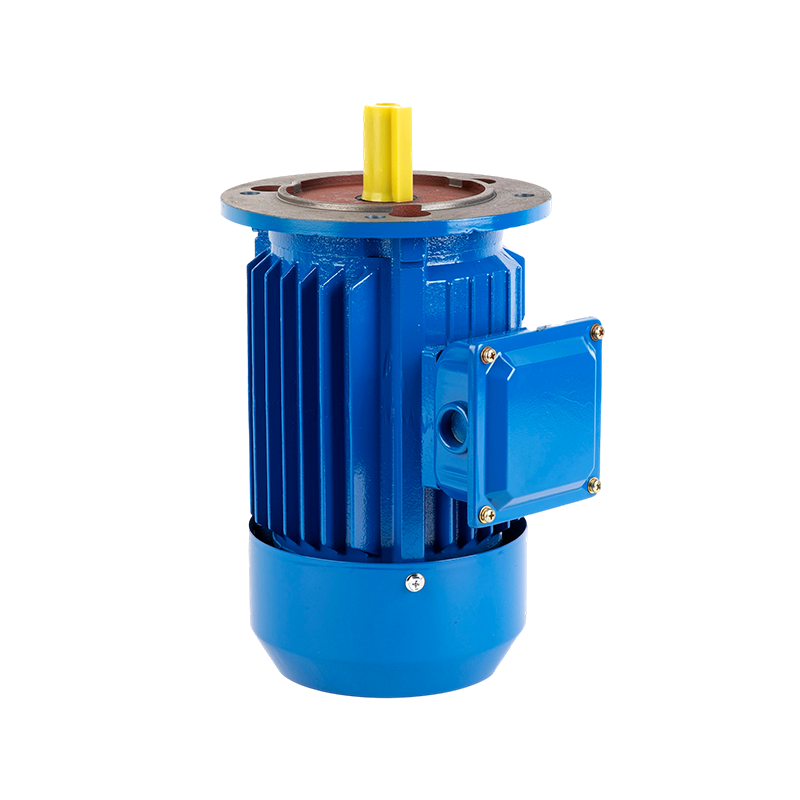
How vector control changes torque and flux control in a 3 phase asynchronous induction motor system
Vector control changes the way a 3 phase asynchronous induction motor is driven by separating torque and magnetic field behavior into different control paths. Instead of treating the motor as a single coupled system, it allows independent adjustment of flux and torque producing components.
In practical operation, this changes how the motor reacts to load changes. The response becomes more controlled, especially during speed variation or sudden torque demand.
What is typically observed in controlled operation:
- torque response becomes more directly adjustable through current components
- magnetic field level remains more stable during load shifts
- speed variation feels smoother under changing mechanical demand
- current distribution becomes more structured rather than purely reactive
The key point is not precision alone, but how the system behavior becomes more predictable under changing operating conditions.
Why temperature rise affects resistance and long term stability in a 3 phase asynchronous induction motor
Temperature rise inside a 3 phase asynchronous induction motor changes how electrical resistance behaves in both stator and rotor circuits. As resistance increases, current flow characteristics shift, which affects both torque generation and energy loss behavior.
This does not happen instantly. It develops gradually during continuous operation, especially when load is not constant or ventilation conditions are limited.
In real operation, temperature influence is often reflected in:
- gradual change in current level under steady load
- reduction in torque consistency under sustained heating
- variation in efficiency feel during long running periods
- increased sensitivity to load changes when temperature is higher
Different parts of the machine respond differently, but the overall effect is a slow shift in operating balance.
How broken rotor bar faults can be identified in a 3 phase asynchronous induction motor using current signal analysis
A 3 phase asynchronous induction motor with rotor bar damage does not fail immediately. Instead, the system begins to show subtle changes in current behavior during operation. These changes are often more noticeable under load than at no-load condition.
The fault introduces irregularities in rotor current distribution, which reflects back into stator current patterns. These variations can be observed without direct access to internal components.
Typical observations in operating behavior:
- small but repeating fluctuations in current waveform
- uneven torque feel during steady rotation
- slight variation in speed stability under load
- changes in vibration pattern during operation
These signs tend to become clearer when the motor is working under moderate or higher load rather than idle conditions.
General tendency of current behavior under rotor fault influence
| Operating condition | Current behavior tendency | Mechanical observation |
|---|---|---|
| Light load | Slight irregular variation | Hard to notice physically |
| Medium load | More visible fluctuation pattern | Mild uneven rotation feel |
| Higher load | Stronger current disturbance tendency | Noticeable vibration change |
In real systems, the pattern depends on load level, mechanical coupling, and operating duration.


