 English
 Español
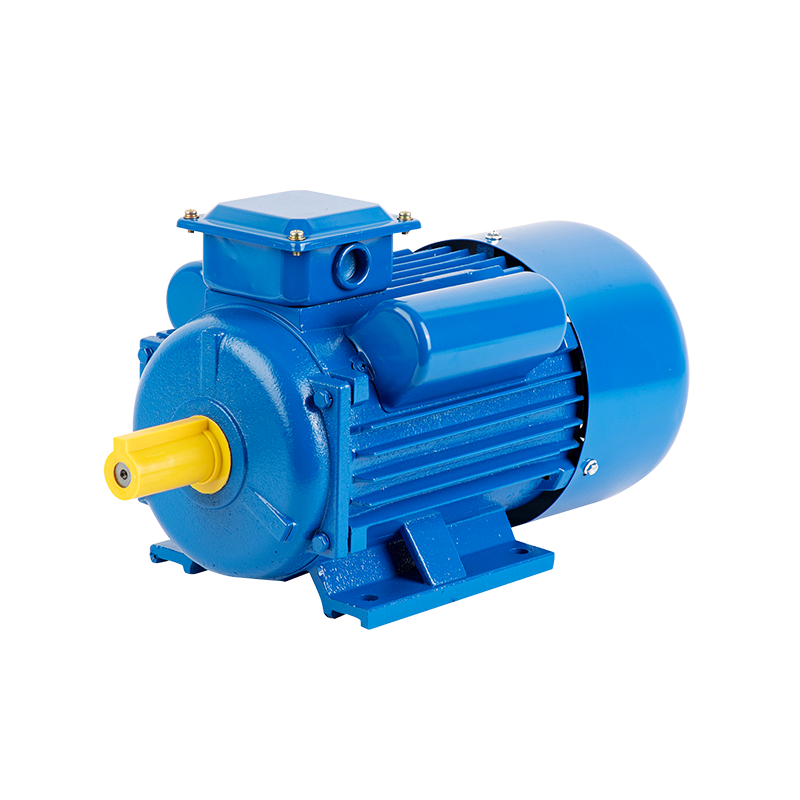
Electric Motor is widely used in industrial equipment as a core device that converts electrical energy into mechanical movement. In real applications,...
READ MORE
-
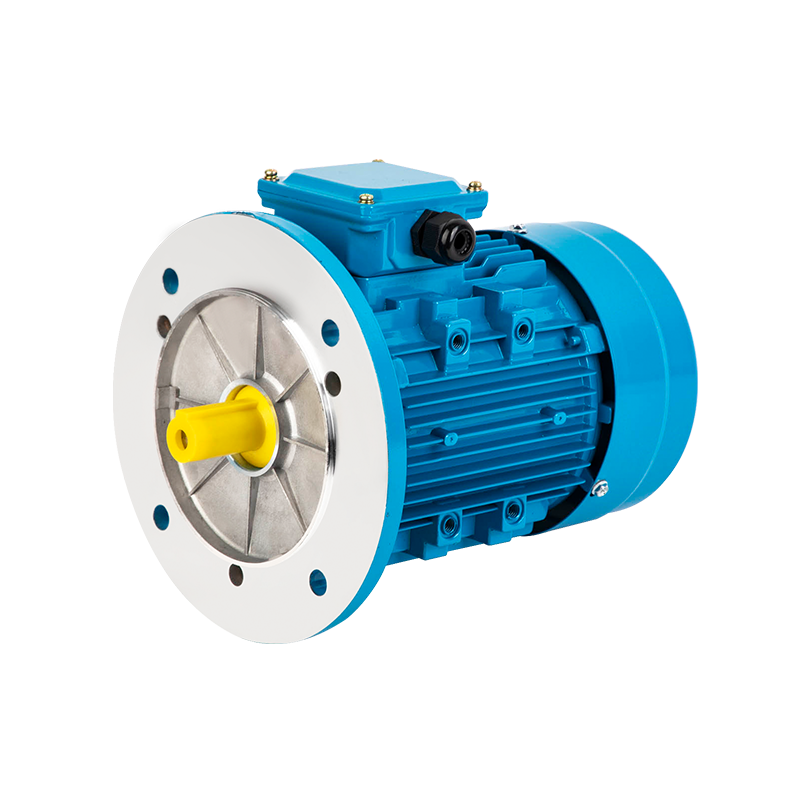 High Speed Long Shaft Motor
-
Asynchronous Long Shaft Motor
-
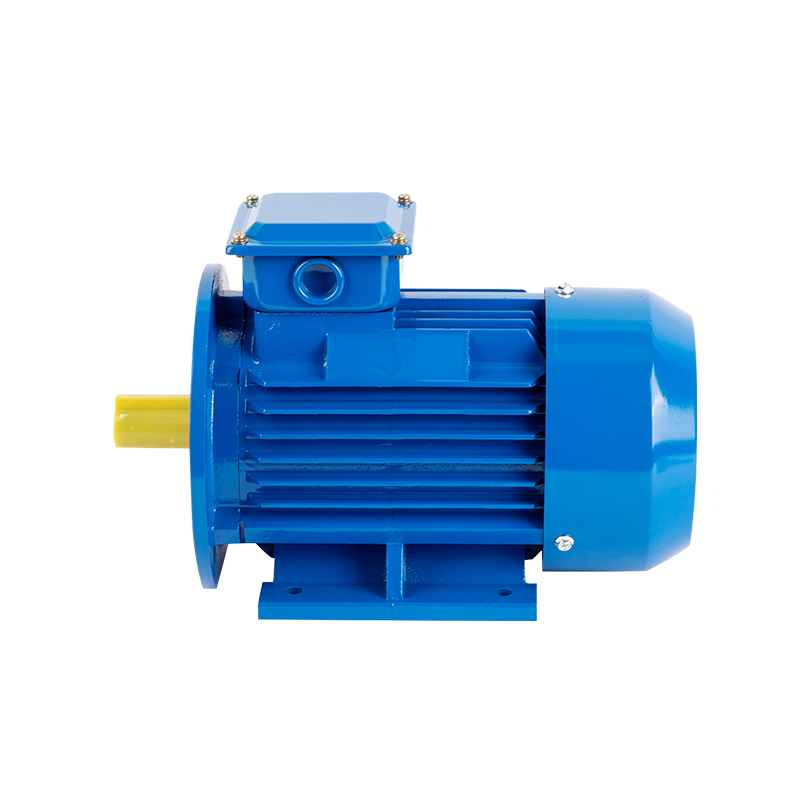 Automation Equipment Three-Phase Asynchronous Motor
-
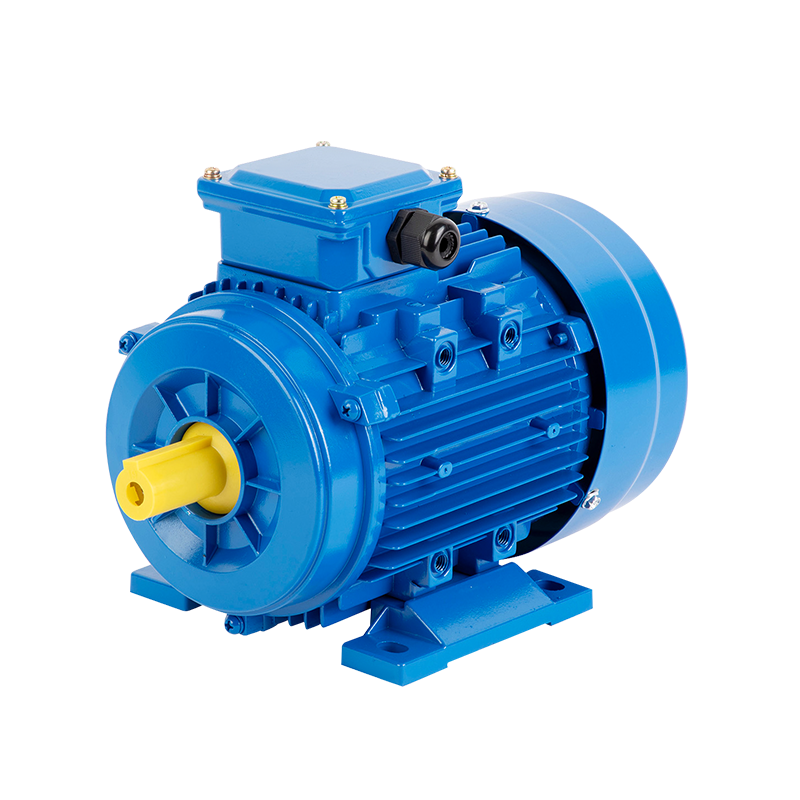 Pump Applications Three-Phase Asynchronous Motor
-
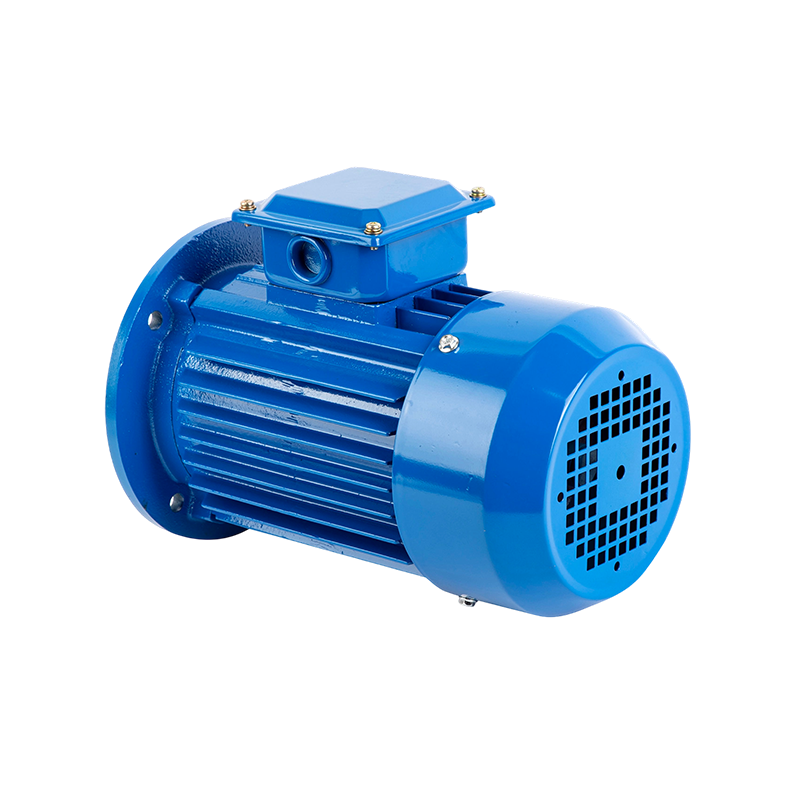 B3 Front Cover Three-Phase Asynchronous Motor
-
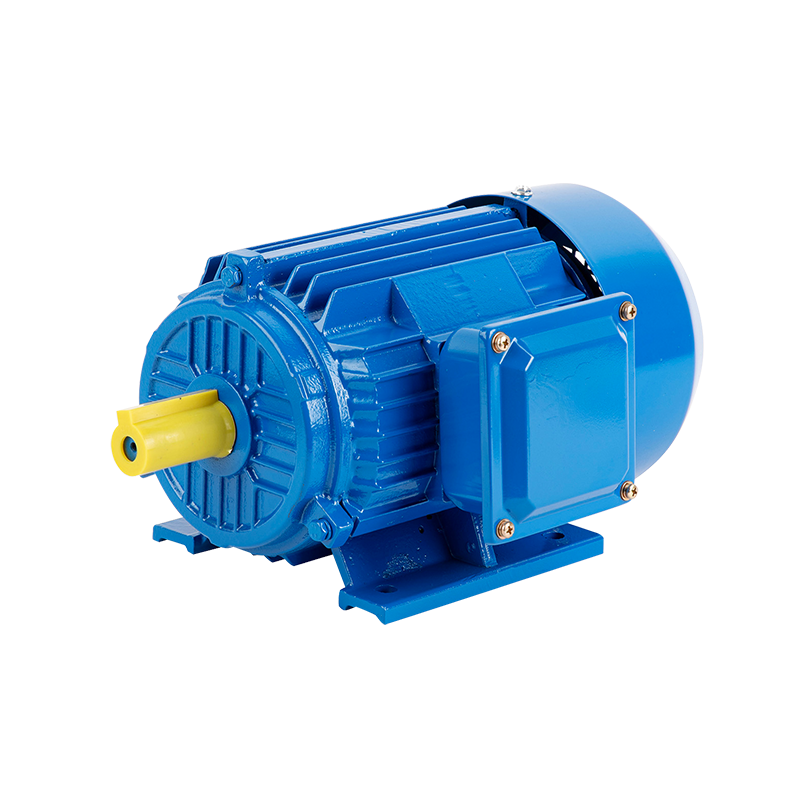 YE3 SPEED 1500RPM 4-POLE 50HZ three-phase asynchronous motor
-
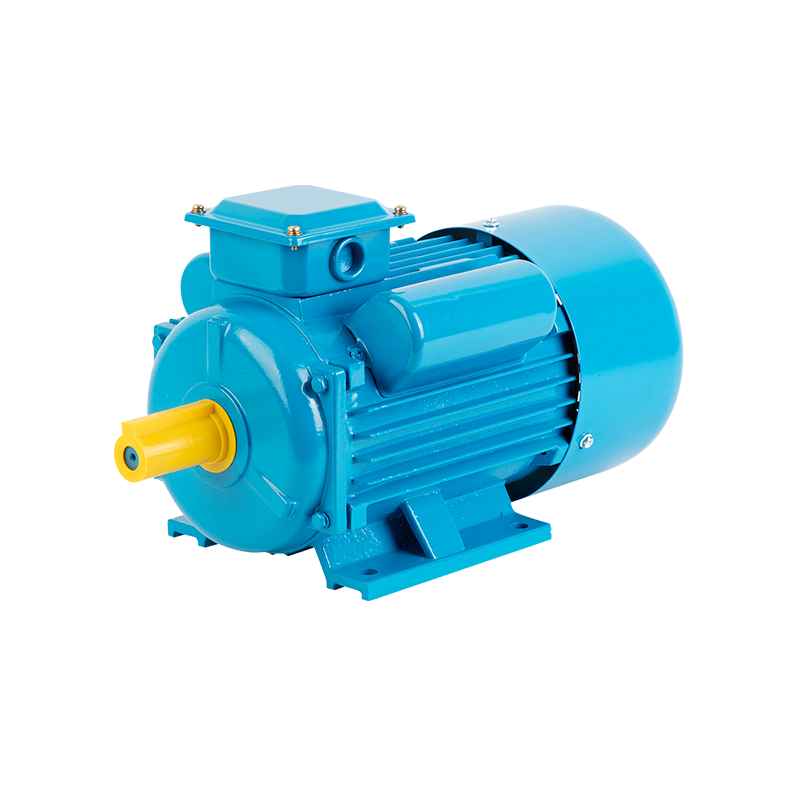 Grinder Motor Motor Double Value Capacitor Asynchronous Motor
-
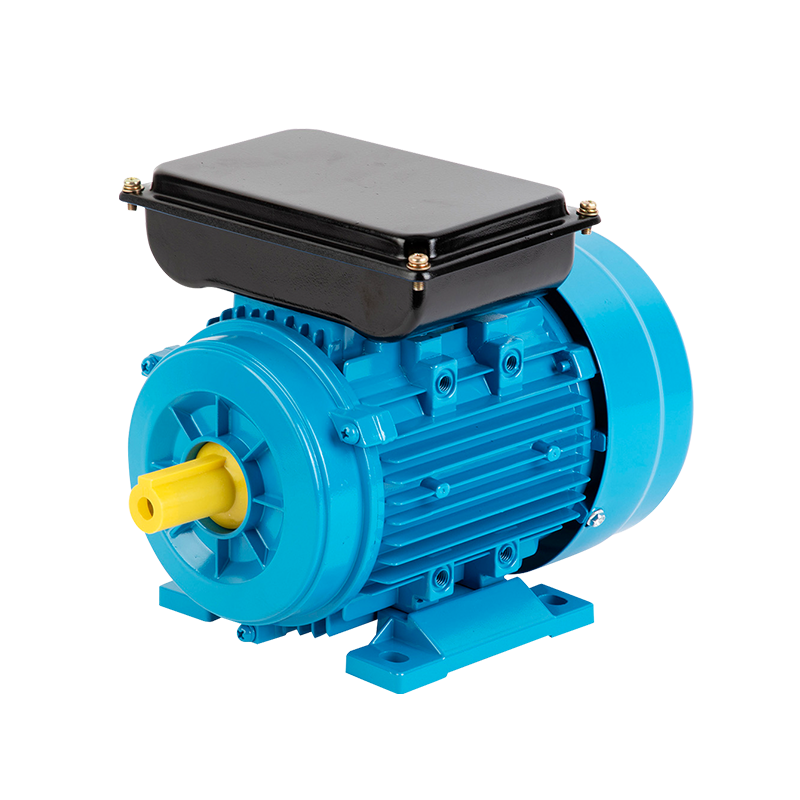 Heat Shrinking Machine Double Value Capacitor Asynchronous Motor
-
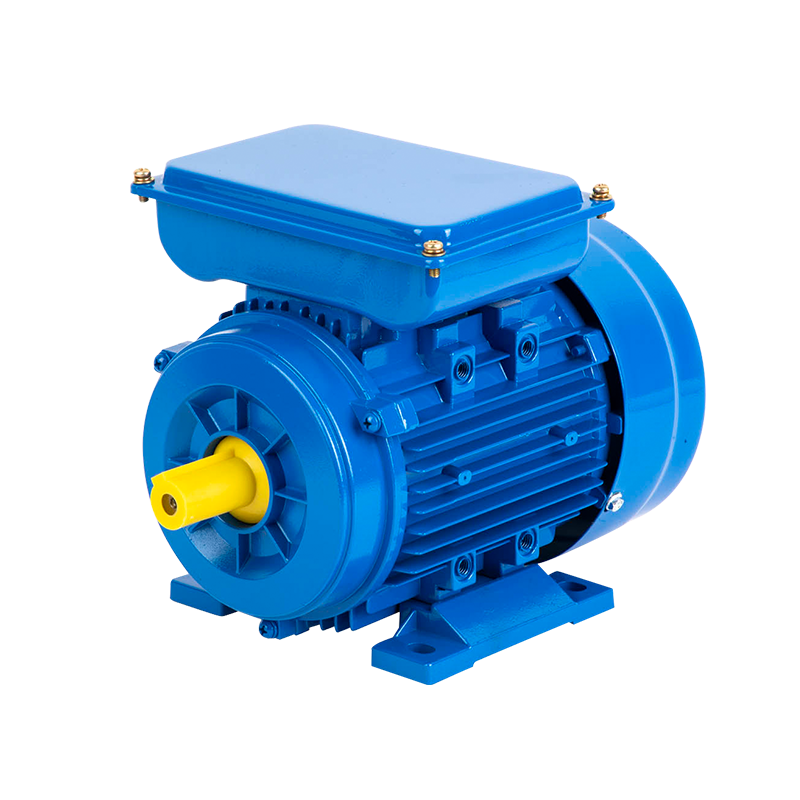 Meat Grinder Mixer Double Value Capacitor Asynchronous Motor
-
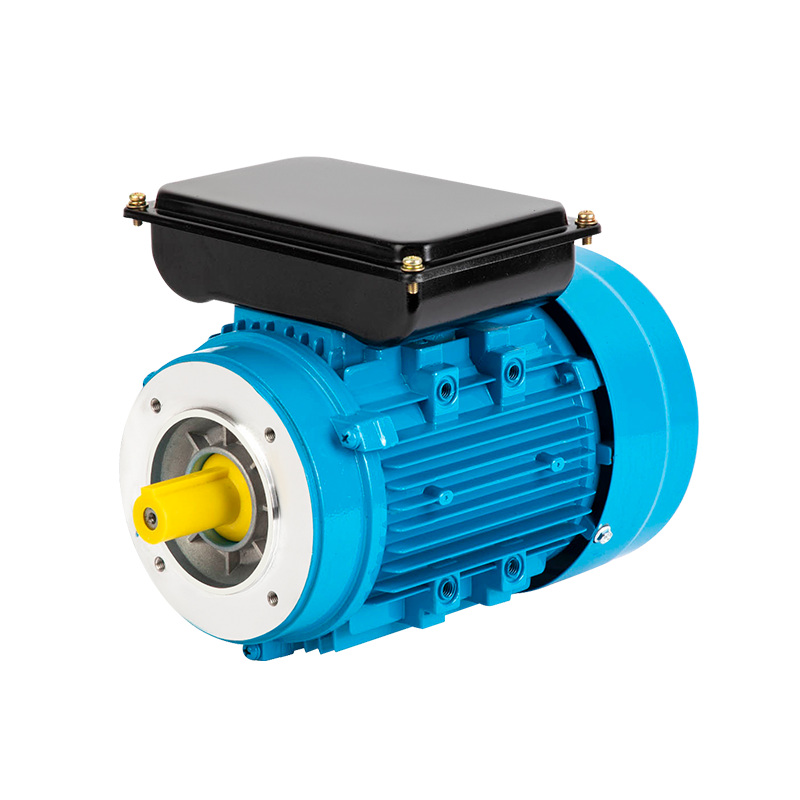 Mixer Double Value Capacitor Asynchronous Motor
-
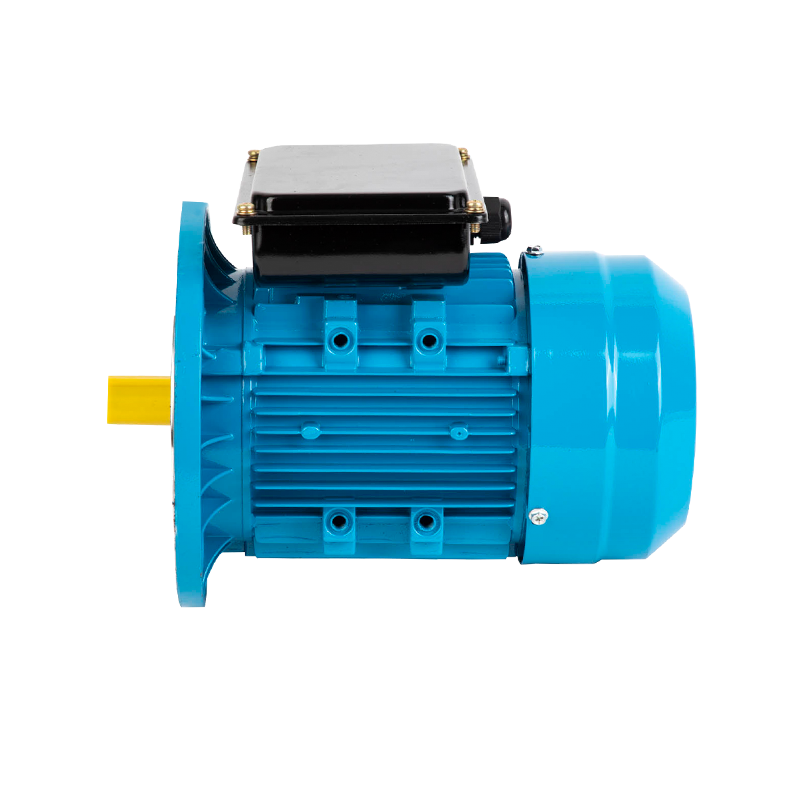 Fan Double Value Capacitor Asynchronous Motor
-
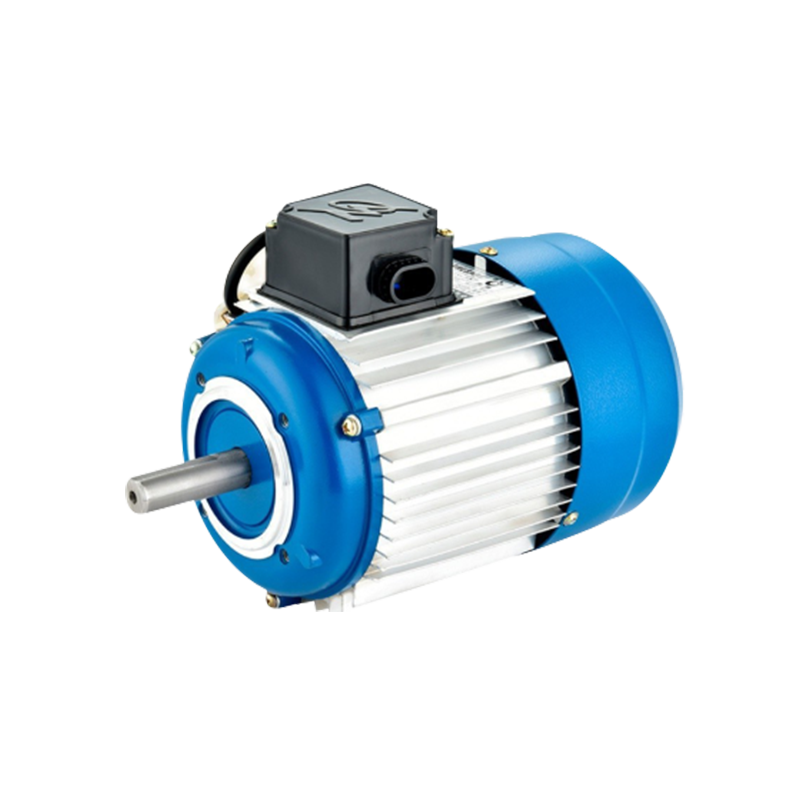 Water Pump Capacitor Run Asynchronous Motor
-
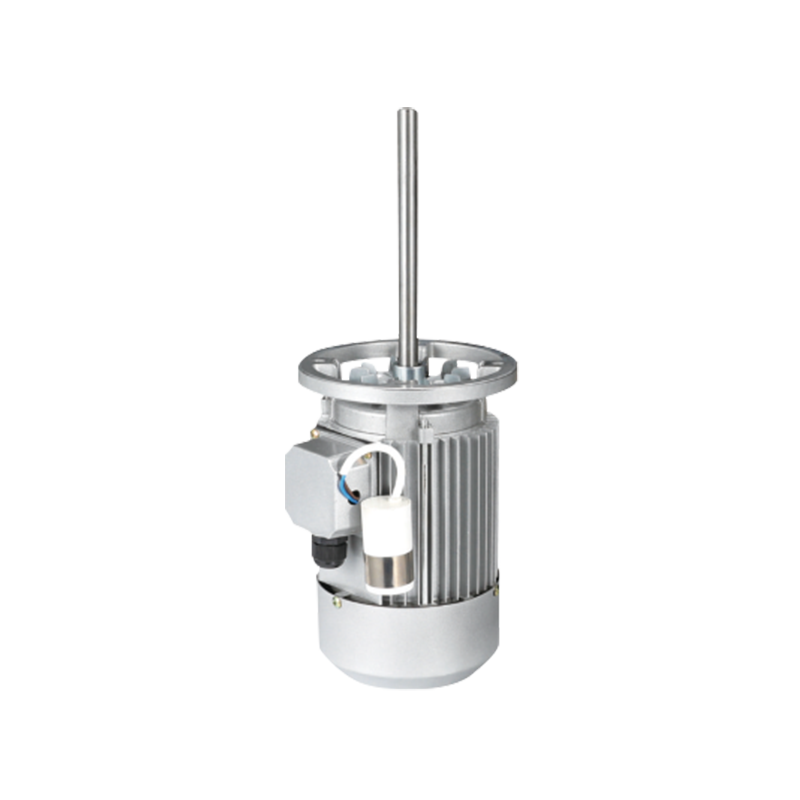 Long Handle Capacitor Run Asynchronous Motor
-
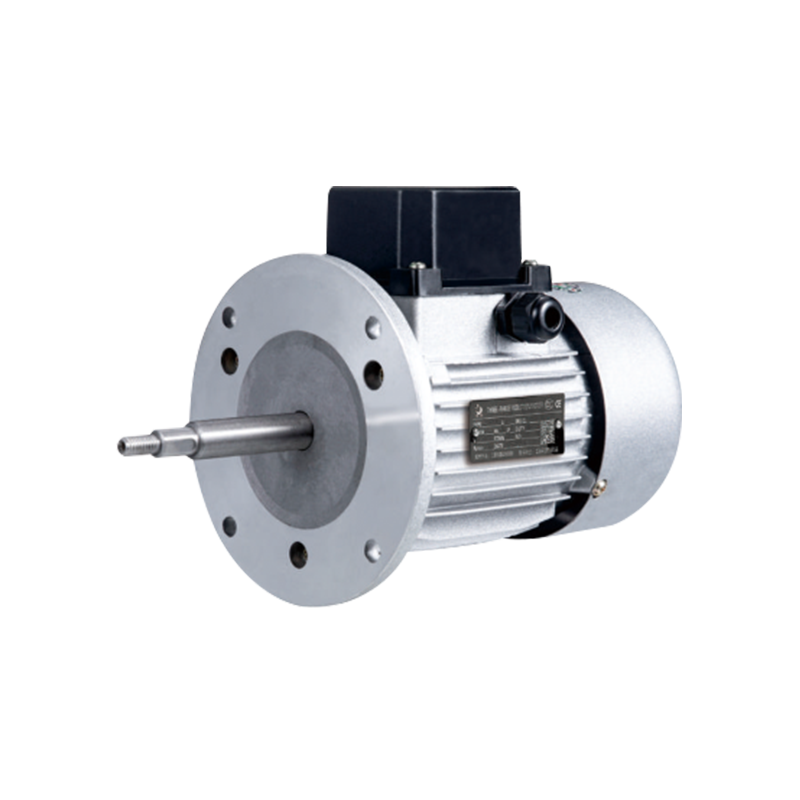 Small Machinery Capacitor Operated Asynchronous Motor
YCL Series Double Value Capacitor Asynchronous Motor
- Y2 Series Three-Phase Asynchronous Motor
- YE3 Series High Efficiency Three-Phase Asynchronous Motor
- YCL Series Double Value Capacitor Asynchronous Motor
- YL Series Double Value Capacitor Asynchronous Motor
- YY Series Capacitor Run Asynchronous Motor
- Customized Long Shaft Motor
- YE4 Series High Efficiency Three-Phase Asynchronous Motor
- Electric Vacuum Pump
- High Pressure Washer
Single Phase AC Motor
Built for practical industrial use, Sweelin's motor range covers grinder motors, can sealing machine motors, high-speed models, and other capacitor-type solutions for stable everyday operation. As a supplier focused on equipment performance and production consistency, we provide reliable options for buyers looking for an AC Asynchronous Motor that fits real application needs. Our product line also supports customers sourcing a Wholesale Asynchronous Motor for manufacturing, replacement, or distribution purposes. For compact machinery and light industrial systems, our Single Phase AC Motor solutions offer a dependable balance of efficiency, smooth running, and installation flexibility.
Get Your Free Quote Now!
About Us
Taizhou Sulin Electromechanical Co., Ltd.
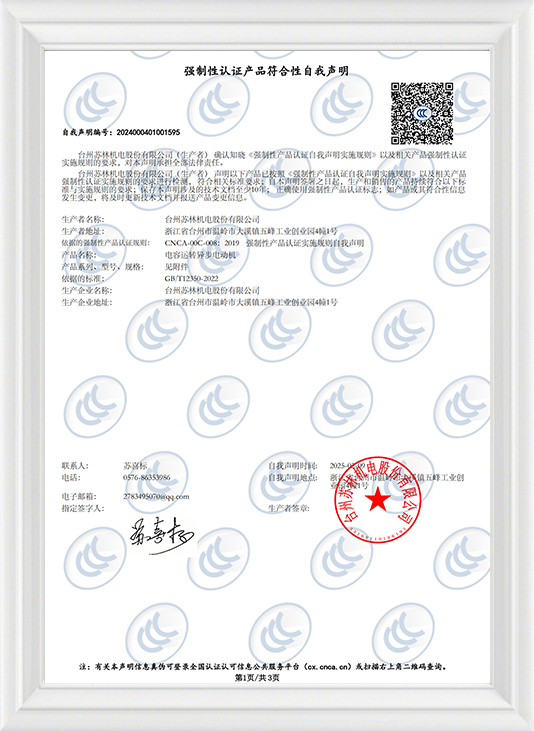
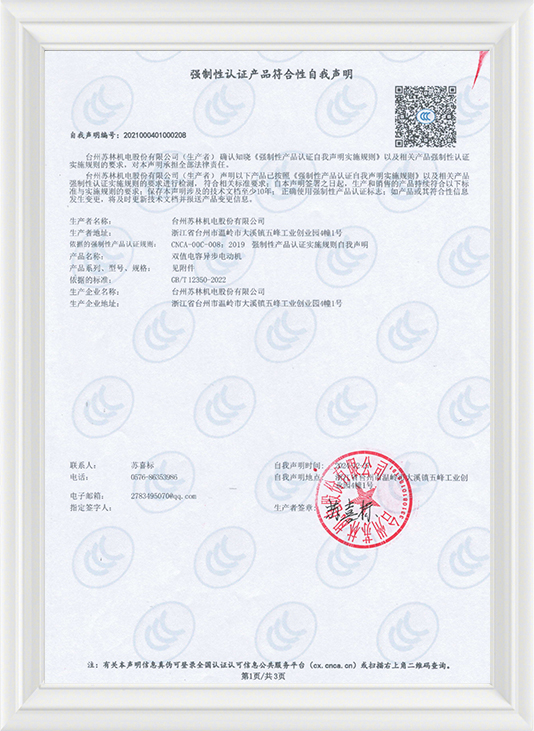
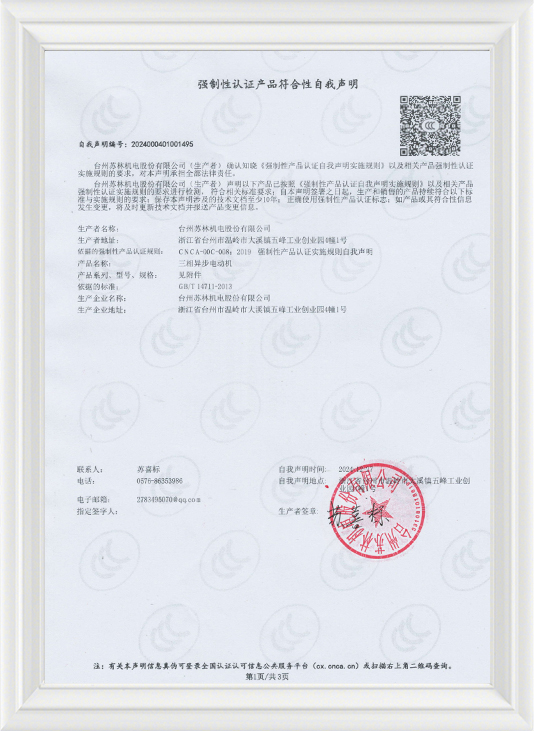
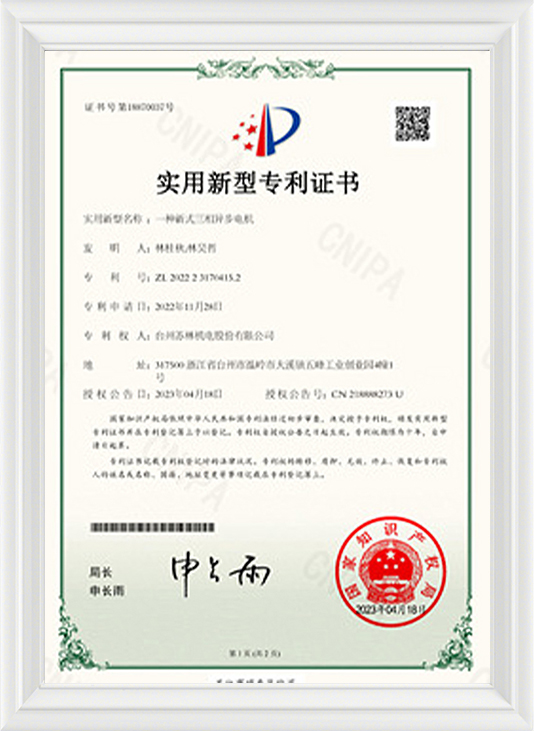
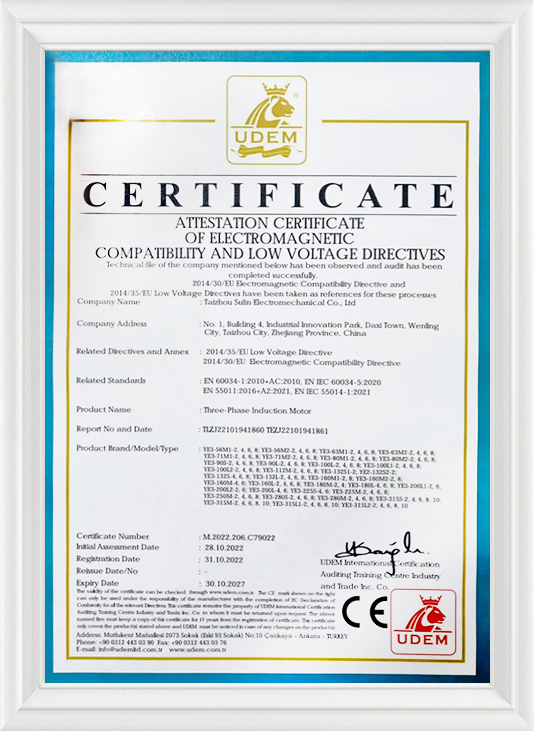
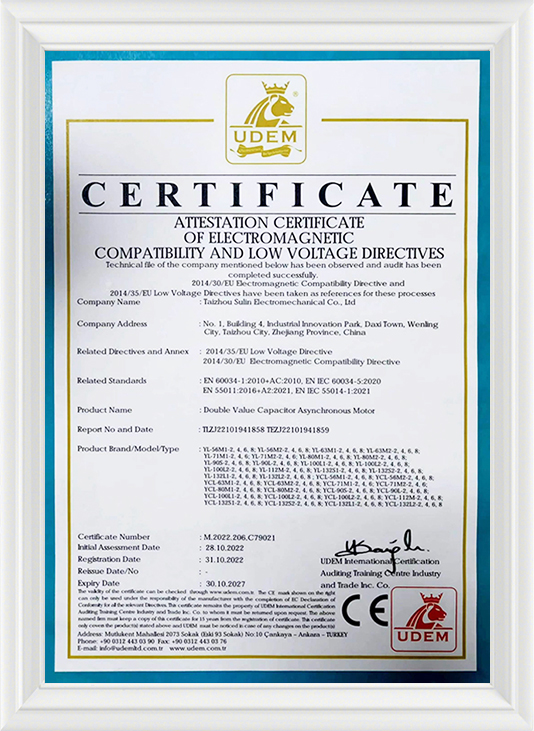
Taizhou Sulin Electromechanical Co., Ltd. is located in Wufeng Industrial Park, Daxi Town, Wenling City, Zhejiang Province. It is adjacent to the G15 and 104 National Highways of Yongtaiwen Expressway, 18 kilometers from Taizhou Luqiao Airport, and 2 kilometers from the train station. The transportation is very convenient. It is a new type of YCL Series Double Value Capacitor Asynchronous Motor manufacturer and YCL Series Double Value Capacitor Asynchronous Motor factory integrating design, production, sales, and service. It has many years of experience producing YY series fan-specific, JY, YE2, YC, YL, YCL, and YS. It has a complete motor automatic computer detection line, advanced manufacturing and assembly production lines, and specializes in producing Dingyi brand series motor products. The products have passed the national compulsory product CCC certification and are exported to the EU CE safety certification.
The motors produced by our company are complete, diverse, advanced in design, in material selection, advanced and unique in technology, with performance and safe, reliable, and durable use. The products are sold well throughout the country and exported to countries around the world and have been well received by domestic and foreign customers.
Certificate Of Honor
News
-
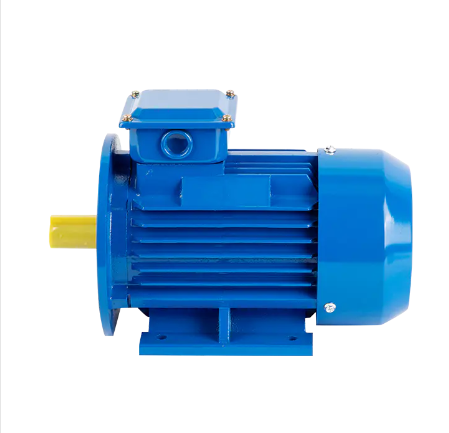
-
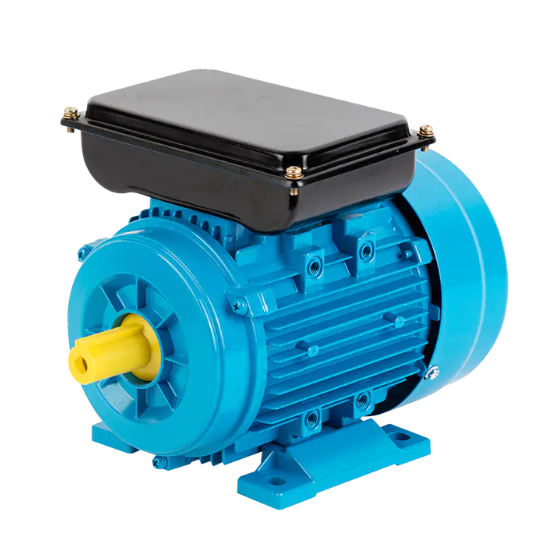
Electric motor is not something most people pay attention to, but they are working almost everywhere around us. Inside factories, water systems, venti...
READ MORE -
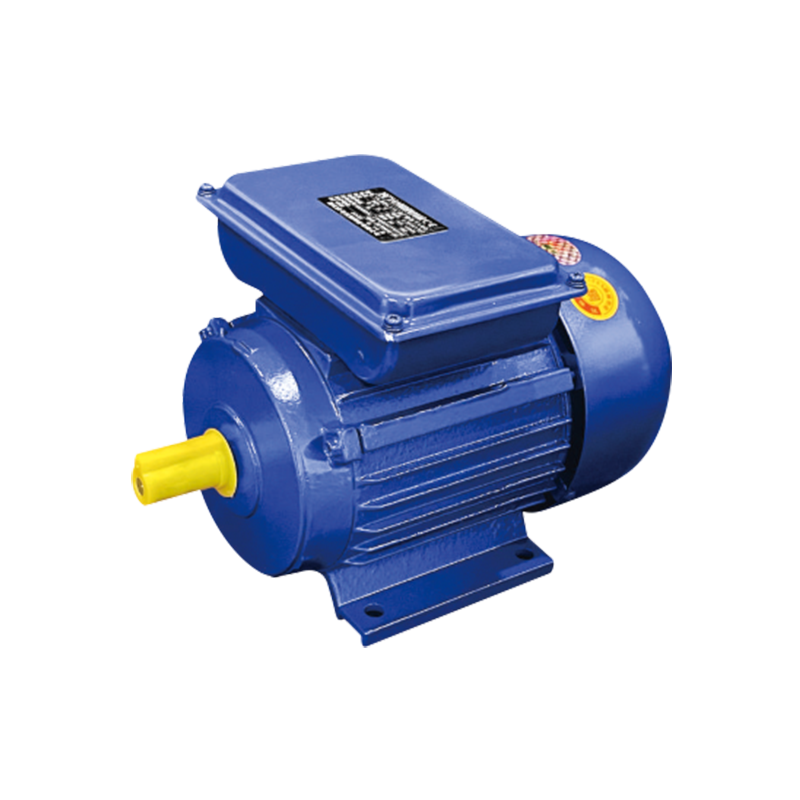
A Three Phase AC Motor is a cornerstone of industrial and commercial operations, providing consistent and efficient mechanical power. Unlike single-p...
READ MORE -
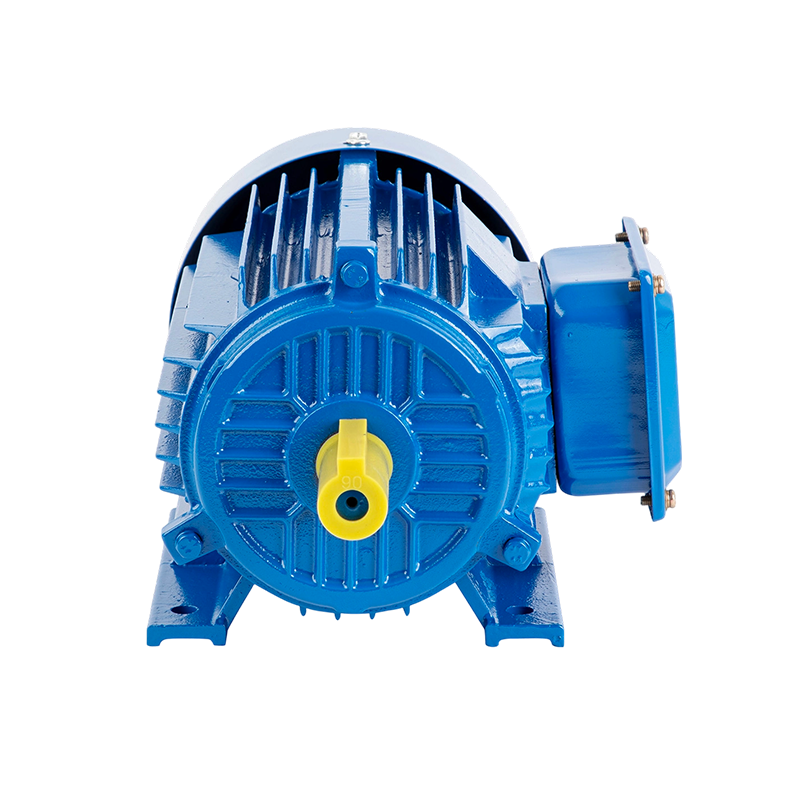
In both industrial and household settings, reliable and efficient motion is essential for equipment operation. An AC electric motor is a device that ...
READ MORE
YCL Series Double Value Capacitor Asynchronous Motor Industry knowledge
Selecting the Right Specifications for Single Phase AC Motors in Your Equipment
Choosing a motor for equipment design or replacement work usually takes more than a quick check of voltage and speed. In day-to-day operation, what really matters is whether the Single Phase AC Motor suits the machine itself — the load it has to handle, the way it starts, how long it is expected to run, how it is installed, and the environment around it. A motor may look fine in a catalog, but that does not always mean it will perform well once the equipment is in regular use. For equipment manufacturers, importers, and industrial buyers, motor selection can shape far more than basic machine function. It plays a part in energy consumption, operating consistency, maintenance frequency, and the working life of the equipment as a whole. That is one reason specification planning continues to matter when sourcing motors for light industrial and commercial applications.
Why specification matching matters
When a motor is matched correctly to the job, the equipment usually runs with better stability and fewer performance issues. A motor that is too small for the load can overheat, start poorly, or wear down sooner than planned. A motor that is too large can create a different set of problems, including avoidable energy loss, added cost, and a less balanced equipment design.
This is especially relevant in applications like food equipment, workshop machinery, compact processing systems, pumps, and packaging machines, where a Single Phase AC Motor is often chosen for its convenience and versatility. Still, two motors that appear similar on paper may behave quite differently once installed. Variations in power level, capacitor design, and mounting dimensions can all influence how the machine performs in daily operation.
Key specifications to review before selecting a motor
|
Factor |
Description |
|
Power Output |
Ensure motor power matches equipment demand for stability and overload protection. |
|
Voltage and Frequency |
Match motor with local standards to prevent issues with speed and efficiency. |
|
Speed Requirements |
Select motor speed based on functional needs, balancing with torque and load. |
|
Starting Performance |
Consider motor's starting torque for equipment with heavy or challenging start-up conditions. |
|
Duty Cycle |
Ensure motor suits intermittent or continuous operation to extend service life. |
|
Installation Dimensions |
Check compatibility with shaft size, mounting type, and available space to avoid integration issues. |
The role of the operating environment
A motor's real-world performance depends not only on its technical data, but also on the environment in which it is used. Dust, humidity, limited airflow, high temperatures, and exposure to oil or chemical materials can all place extra strain on the motor over time. In more demanding applications, factors such as insulation grade, enclosure protection, and cooling design need to be considered more carefully during the selection stage.
For that reason, many industrial customers prefer to work with manufacturers that understand actual operating conditions rather than relying only on catalog figures. SWEELIN Electromechanical combines practical motor engineering with disciplined manufacturing control to support a broad range of equipment applications. With close attention to both design accuracy and production stability, the company helps customers source motors that can deliver reliable performance in everyday working environments.
Common mistakes in motor selection
Problems often start when a motor is chosen too fast during equipment design or purchasing:
- judging the motor only by rated figures instead of its actual working load
- looking at purchase cost first without weighing long-term operating return
- missing the importance of starting characteristics
- failing to confirm installation space and dimensional match
- assuming different single phase motors will perform the same in use
These choices may seem acceptable at the ordering stage, but later they can lead to uneven operation, overheating, more frequent servicing, and a shorter service life for the equipment.
Why supplier capability also matters
The supplier behind a motor can influence product reliability as much as the specification itself. A motor may look correct on paper, but the final result still depends heavily on manufacturing discipline, quality consistency, and the supplier's understanding of practical application demands. For OEMs and distributors, working with a manufacturer they can rely on is an important way to reduce variation between batches and maintain confidence in long-term supply.
That is why production resources matter beyond the factory floor. As manufacturing capability grows, a supplier is better positioned to support different project volumes, maintain stable output, and respond to market demand more effectively. SWEELIN Electromechanical continues to expand both its technical and production strengths, helping customers in global markets access motor solutions supported by sound engineering, steady manufacturing, and dependable supply capacity.
A practical approach to selecting the right motor
Choosing a Single Phase AC Motor should begin with the actual demands of the equipment, not with catalog data alone. Load behavior, starting conditions, operating pattern, installation limits, surrounding environment, and available power all shape whether a motor will be suitable in real service. Considering these points together gives buyers a more accurate basis for selection and helps reduce mismatch or operating trouble after installation.
When the motor is selected around the way the machine truly works, the benefits often show up in daily operation. Performance tends to be steadier, power use is easier to control, and maintenance can usually be planned with fewer surprises. In many applications, a careful choice early on can prevent later changes that add cost and delay.
The specifications chosen for a Single Phase AC Motor influence more than startup capability or rated speed. They also affect how reliably the equipment runs, how efficiently energy is used, how long the motor remains serviceable, and how well it fits into the complete system. By basing the decision on practical operating needs and working with an experienced manufacturer such as SWEELIN Electromechanical, buyers and equipment builders can make selections that support dependable long-term performance.


-

Building 1, Block 4, Wufeng Industrial Park, Daxi Town, Taizhou City, Zhejiang Province, China
-

+86-18157698088
+86-18857638968
-

+86-13566687811
+86-18157698088

